Description
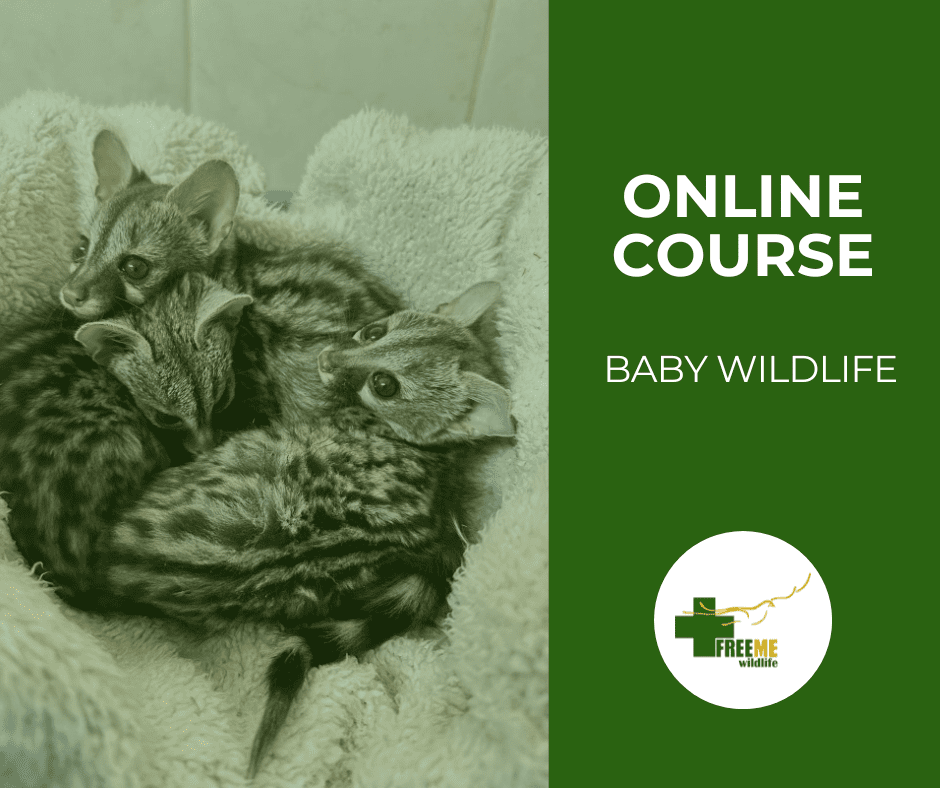
This course is a specialized course focused on the correct approach to take when dealing with baby wildlife cases. Please complete the introduction to wildlife rehabilitation and the introduction to wildlife nutrition courses first if you are wanting to do the full rehabiliation of baby wildlife from admission to release.
- The baby wildlife course explores the impact of human activities on wildlife and provides guidelines for minimizing unnecessary interventions. Key areas of conflict include:
- Poaching.
- Habitat loss.
- Pet-related dangers.
- The A, E, I, O, U method (Advice, Environment, Injuries, Observe, Understand) is introduced as a practical tool to assess whether intervention is necessary.
- The module also offers specific handling and identification guidance for various animals, including hares, rodents, bats, and birds.
- By reducing unnecessary human interactions and encouraging natural behaviors, the module aims to enhance the chances of successful survival for baby wildlife.
- The course emphasizes the importance of public education on when and how to intervene safely and responsibly, fostering coexistence and care for wildlife, rather than encouraging the unecessary removal of healthy baby wildlife from the wild.
For any enquiries, please drop us an email on courses@freemewildlife.org