

Description
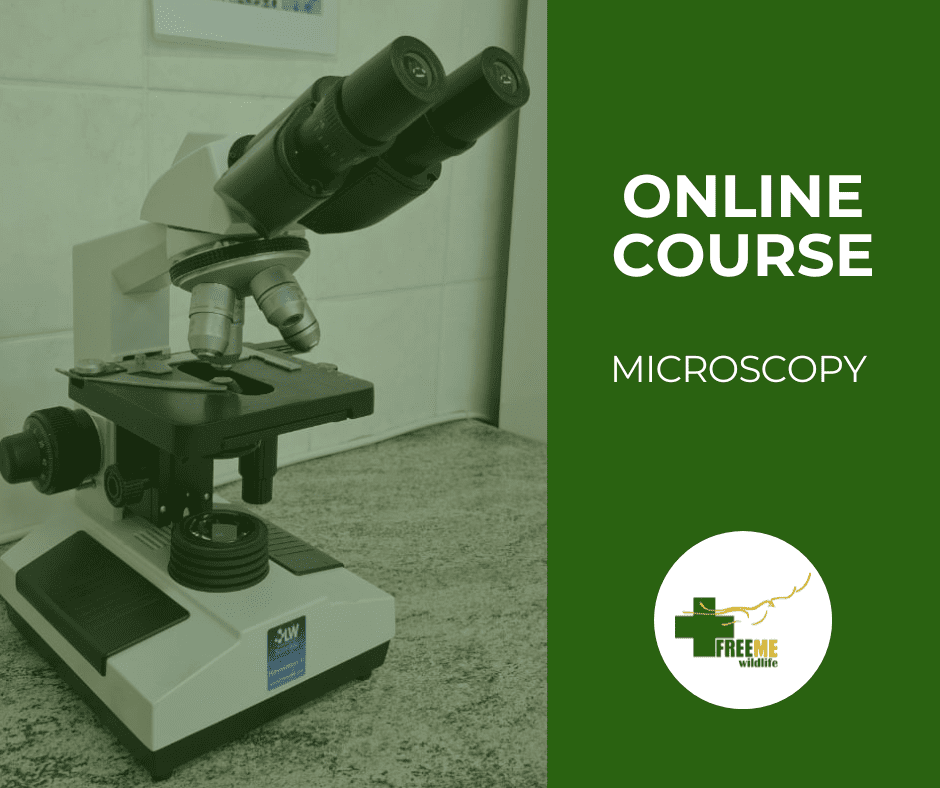
This course is a specialized course focused on covering the basics of microscopy in a wildlife rehabilitation setting. It is not designed to replace the diagnostic skills of veterinarians or laboratories, but to equip wildlife rehabilitators with the opportunity to assist and support veterinarians, laboratory technicians, and researchers by understanding the basics of preparing blood slides and fecal floats, and having a rudimentary knowledge of what they are looking for under the microscope.
- The microscopy course provides a microscopy guide and introduction into blood and faecal analysis for diagnosing wildlife health issues.
- It explains the basics of preparing and staining blood and faecal smears and offers guidelines for identifying white cells, red cells, platelets, and common parasites under a microscope.
- The guide details using different magnifications to view cellular abnormalities and parasitic eggs or worms in faecal samples, aiding in diagnosing infections, anaemia, and toxicosis.
- Practical tips on slide preparation, stain application, and handling the microscope help wildlife professionals conduct effective microscopic examinations to support rehabilitation efforts.
For any enquiries, please drop us an email on courses@freemewildlife.org


